
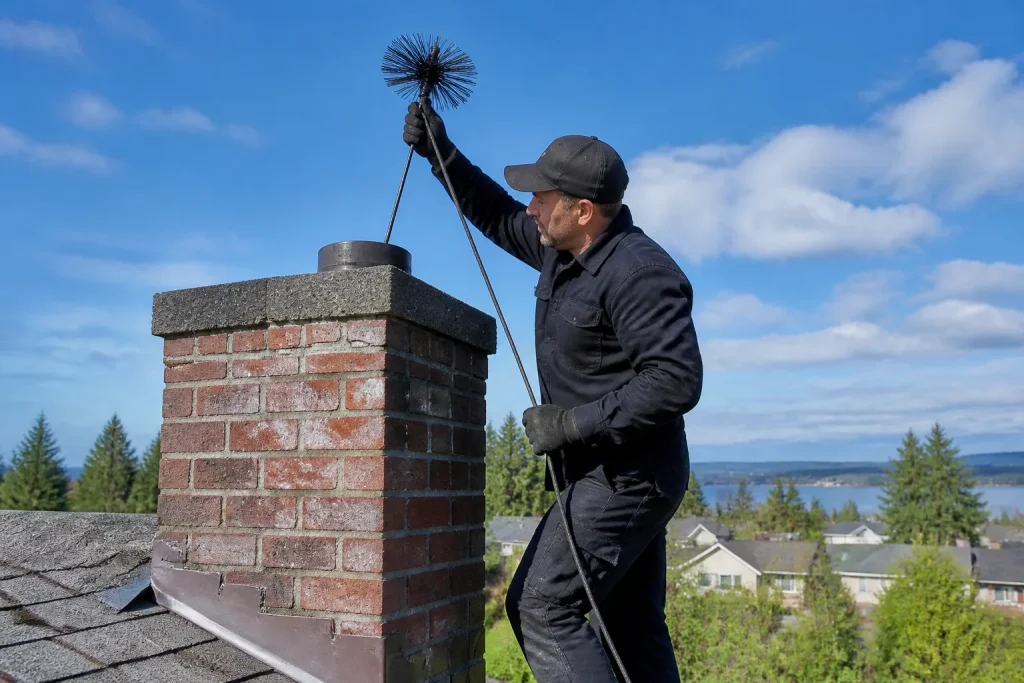
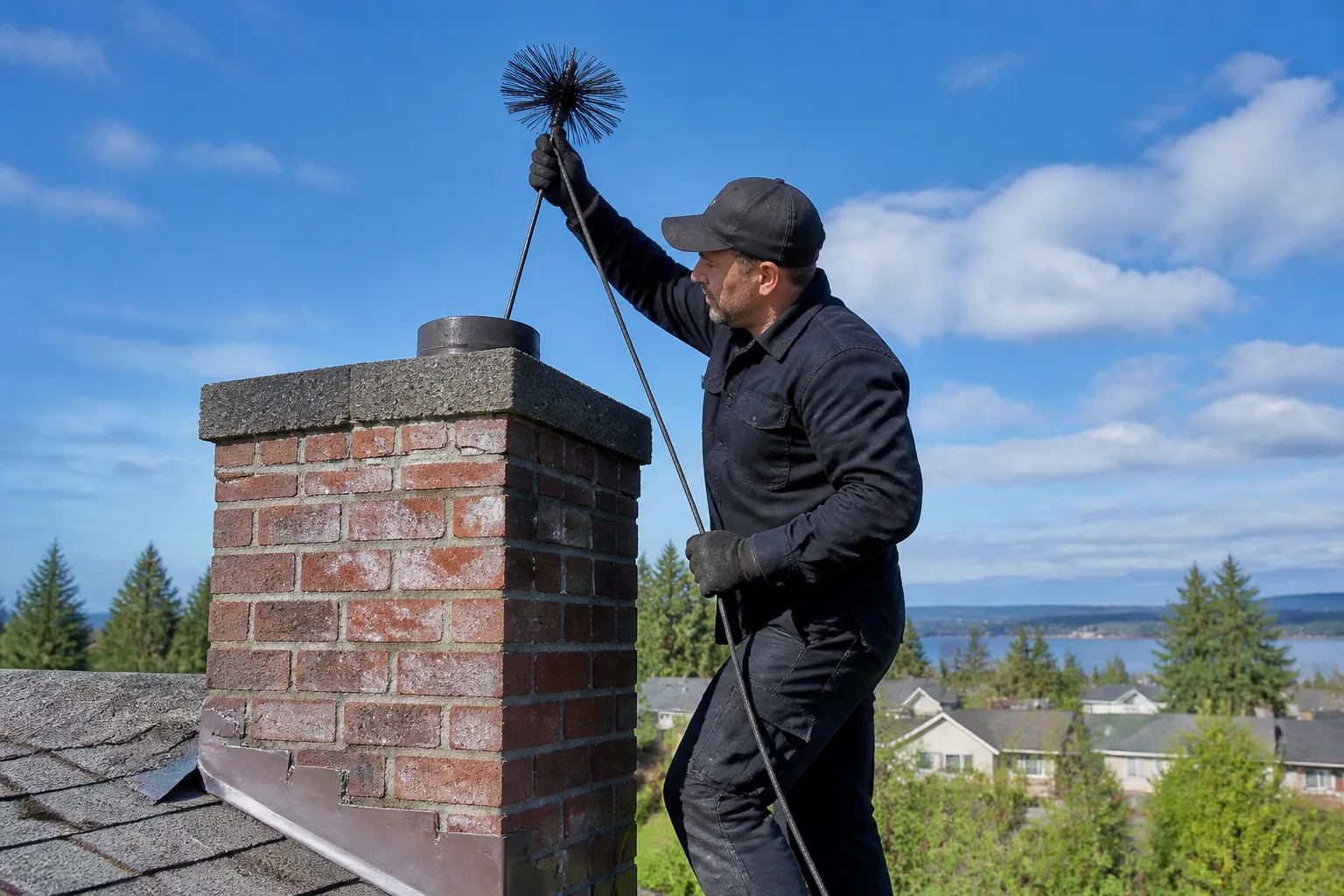
How to Choose the Right Chimney Cleaning Company in Marysville
Most homeowners vet a chimney sweep the same way they’d vet a lawn service: check the stars, pick the closest one, book it. Chimney work is a safety trade, and a five-star review won’t tell you whether the technician who shows up can spot a cracked flue liner before it becomes a carbon monoxide problem. Choosing well in Marysville comes down to four questions you can ask before you ever book an appointment – and knowing what a good answer sounds like versus a dodge.
Key Takeaways
- Ask four diagnostic questions up front: certification, inspection scope, equipment and materials, and whether findings get photographed.
- A dedicated chimney specialist carries different training and liability exposure than a handyman with a brush bolted onto his truck.
- Insist on a written inspection report with photos; a verbal “looks fine” protects nobody.
- Verify the company’s Washington State registration and insurance before anyone climbs on your roof.
What Four Questions Separate a Specialist From a Generalist?
The four questions are: Are you certified, and by whom? What exactly does your inspection cover? What equipment and materials do you use? And will I get photos of what you find? A trained chimney professional answers all four without hesitation. A generalist usually stumbles on at least two. Those questions work because they probe things that can’t be faked in a phone call – the answers either reflect real trade knowledge or they don’t.
Here’s what to listen for on each:
- Certification. Look for CSIA (Chimney Safety Institute of America) or NFI (National Fireplace Institute) credentials. Ask for the certification directly, not a vague “we’re fully licensed.” Certification means the technician passed a written exam on venting, clearances and combustion safety, not just that they own a brush.
- Inspection scope. A real inspection covers the firebox, damper, smoke chamber, flue liner and cap, and it includes a look at the exterior where accessible. If the answer is “we just sweep and take a peek,” that’s a cleaning, not an inspection.
- Equipment and materials. Ask what they use for liners, caps and crowns. In our experience, specialists name their products – DuraFlex flexible liner systems, HeatShield resurfacing compound, a Famco or Copperfield cap. A generalist says “we use good stuff.”
- Photography. Will the technician photograph what they find and put it in a report? A cracked crown or deteriorated flue tile can be shown to you on a screen. If it can’t be shown, you can’t verify it, and you can’t make an informed decision.
Those answers tell you more than any review profile. For a service that’s fundamentally about your family’s safety, that’s the vetting that matters.
Why Does a Handyman With Chimney Add-Ons Carry Different Risk?
A general handyman with chimney add-on services carries different liability exposure because his insurance, training and experience were built around general repair, not combustion venting. Chimney work involves fire, carbon monoxide and structural loads on the roof – three things a general liability policy may not cover when the work goes wrong. If a handyman installs a cap incorrectly and water gets into the crown, or a liner is fitted with the wrong material and a flue fire follows, you’re the one holding the problem.
A dedicated chimney company, on the other hand, builds its business around one system. That focus shows up in a few specific ways:
- The work falls within the company’s insured scope, so a mistake is a covered claim, not a dispute.
- The materials are trade-grade, sourced through professional chimney suppliers rather than whatever’s on the hardware store shelf.
- The technician has seen enough chimneys to recognize the difference between normal creosote glaze and dangerous stage-three buildup on sight.
- The same company can sweep, inspect, and repair – so nothing gets lost between the person who found the problem and the person who fixes it.
This matters in Marysville because the housing stock varies widely. Older homes may have clay tile liners showing their age; newer ones may have factory-built metal flues with specific manufacturer requirements. A generalist doesn’t know those differences. A specialist does, and knows when to bring in the right material – whether that’s a DuraFlex liner for a flue that needs full relining or HeatShield for a tile liner that can be restored instead of replaced.
What Should a Written Chimney Inspection Report Actually Contain?
A written inspection report should contain the condition of every accessible chimney component, the level of inspection performed, photographs of any defects found, and a clear recommendation for each – including whether the issue can safely wait. It should identify the flue type, note any creosote buildup, record the condition of the crown, cap, flashing and damper, and state plainly what needs attention now versus what can be monitored.
Here’s what a verbal “looks good” assessment costs you:
- No documentation if you sell the home and the buyer’s inspector asks for records.
- No baseline to compare against next year’s inspection.
- Nothing to show your insurer if a claim arises.
- No way to verify the technician actually looked at the parts that matter.
That last point is the big one. Water damage is the leading cause of chimney structural failure, and it starts small – a hairline crack in the crown, a missing cap screen. If the technician doesn’t photograph it, you have no idea whether it was there last year or showed up this spring.
A proper report protects you three ways: it gives you a record, it gives your insurer or buyer a record, and it gives the next technician a starting point. In Marysville, where summer sun and winter rain work on a crown from opposite directions, that record is how you track deterioration over time instead of discovering it all at once. An inspection is a safety assessment, not a sales call – a good company will tell you plainly when work can wait.
What’s the Difference Between a Sweep and an Inspector?
A sweep cleans the flue and firebox. An inspector evaluates the entire chimney system and documents its condition. A sweep removes creosote and soot, checks that the flue is clear, and confirms the damper operates. An inspection goes further: it assesses the liner, smoke chamber, crown, cap, flashing and clearances, and it produces a report. Many homeowners need both at the same time – the sweep cleans, then the inspection evaluates what the cleaning revealed.
When do you need a standalone inspection rather than a routine sweep?
- Before buying or selling a home. A pre-sale inspection tells both parties what they’re dealing with. Real estate transactions often require it.
- After a storm. Wind can shift a cap or crack a crown. A post-storm inspection catches it before water gets in.
- When an insurer or previous inspector flags something. If you’ve been told your chimney needs attention, a second opinion from a specialist is worth the call.
- Before the first burn of the season, if you haven’t had a sweep recently. This is the standard annual safety check.
In practice, most Marysville homeowners book a sweep and inspection together. The technician cleans the flue, then cameras the liner and documents what’s there. You get the cleaning you needed and the report that tells you what’s next. If you’ve been putting off a cleaning for a few seasons, don’t skip straight to a repair call – see the chimney sweep service first, because a full inspection starts with a clean flue.
What Should You Verify About Licensing and Insurance in Washington State?
Verify that the company is registered with the Washington State Department of Labor & Industries and carries current liability insurance, and ask for the certificate of insurance before work begins. Washington requires contractors to register with L&I, and a legitimate chimney company will provide proof of registration and insurance without being asked twice. If a company can’t produce both, don’t book.
The specifics to check:
- Contractor registration. You can verify a Washington contractor’s registration through the state L&I system. A registered contractor carries the bond and insurance the state requires.
- Liability insurance. Ask for the certificate and confirm the policy is current. This is what covers your home if a repair goes wrong or something gets damaged on the roof.
- Worker coverage. If the company sends employees rather than a sole operator, Washington requires workers’ comp coverage for them. Ask.
- Written estimate. Get the scope in writing before any work starts. A written estimate sets the final price – not a verbal range over the phone.
This is also where the certification question comes back. State registration tells you the business is legally operating in Washington. CSIA or NFI certification tells you the technician has been tested on chimney safety specifically. You want both, and neither substitutes for the other. In Marysville, verifying these before work begins is the difference between a repair you can stand behind and one you can’t.
When to Call a Pro
Call a professional when the chimney hasn’t been swept in a year of regular use, when you notice creosote glaze on the firebox walls, when smoke backs into the room on lighting, or when a storm has moved the cap. Call immediately if you smell gas near a gas fireplace, if the damper won’t open, or if the firebox shows cracked masonry. Those are safety issues, and DIY work on a high-tension spring, an electrical component near the flue, or a gas line is not a project to take on yourself – a trained professional should handle it.
Related services in Marysville: if your chimney cleaning turns up a problem, we also handle chimney repair and fireplace repair, from relining to firebox masonry and damper work. Same company, same trade, no referrals to a “repair guy” you’ve never met.
The Bottom Line
Choosing a chimney company in Marysville isn’t about star ratings. Ask four questions – certification, inspection scope, materials and equipment, and whether findings get photographed – and you’ll separate a trained specialist from someone with a brush and a ladder. Verify Washington State registration and insurance before work begins. Insist on a written report with photos. When a company gives you all four answers clearly and puts them in writing, you’ve found the right one.
If you’re in Marysville and need help, Marysville Chimney Sweep offers free estimates – call (877) 820-9607. We answer 24/7. Fast dispatch from 7am to 7pm, Sunday through Friday. Our technicians have up to 12 years of experience, and we work with professional-grade materials from brands the trade relies on. The estimate is free, and the written estimate sets the final price. Learn more at Marysville Chimney Sweep.
Frequently Asked Questions
Check three things: Washington State L&I contractor registration, a current certificate of liability insurance, and CSIA or NFI certification for the technician. A legitimate company provides all three when asked. Call (877) 820-9607 for a free estimate – estimates are free.
Often yes, and they’re usually done together. A cleaning removes creosote; an inspection evaluates the full system and produces a written report. If you’re buying or selling a home, or an insurer has flagged an issue, ask for a standalone inspection. Call (877) 820-9607 – the estimate is free.
You get a photo of it and a recommendation. Depending on the damage, a HeatShield ceramic resurfacing may restore the existing liner as an alternative to full relining with a DuraFlex system. Nothing gets recommended without camera evidence you can see for yourself. Call (877) 820-9607 for an exact quote – estimates are free.
Once a year during regular use is the standard. If you burn wood heavily or notice smoke backing up, sooner. A properly installed cap and crown keep water and animals out between cleanings, which extends the life of the flue. Call (877) 820-9607 to book a sweep – estimates are free.
Written by the team at Marysville Chimney Sweep.
Need Chimney Cleaning Help?
Call Marysville Chimney Sweep - the local pro we connect you with is licensed and insured, with free written estimates in Marysville.
(877) 820-9607